Plan your Channel Islands visit
Choose your landing: an activity on one side of an island may not be reachable from another ferry landing. Check the exact landing and meeting point before booking.
If camping: find matching boat and campsite availability. There are no shops, and you carry your own equipment.
Read the National Park Service camping guidance for current water facilities and reservation requirements.
Looking for an island trip with hotels and restaurants? Compare Catalina Island. See the California destination hub for mainland options.
What Is Channel Islands National Park (And Why Visit)
Channel Islands National Park is a cluster of five islands off the coast of Southern California, sitting quietly in the Pacific just a boat ride from the mainland. Unlike most national parks, you can’t drive in — there are no roads connecting it to the rest of the state, and that’s exactly what makes it special.
Because the islands have stayed so isolated, they’ve become a refuge for plants and animals found nowhere else on Earth. Visiting feels less like a typical park trip and more like stepping onto a wild, untouched piece of California that time (and traffic) forgot.
If you love hiking, kayaking, wildlife watching, or just want to disconnect from cell service for a day, this park delivers all of it without the crowds you’d find at places like Yosemite or Zion.
Quick facts (location, size, “Galapagos of North America”)
- Location: Off the coast of Ventura and Santa Barbara, California — the nearest island is about 11 miles from Oxnard.
- Islands included: Five of the eight Channel Islands — Anacapa, Santa Cruz, Santa Rosa, San Miguel, and Santa Barbara.
- Size: Roughly 249,561 acres, covering both land and surrounding ocean. Wikipedia
- Established: March 5, 1980, though parts of the park were first protected as a national monument back in 1938.
- Nickname: Often called the “Galapagos of North America” because of its over 2,000 species of plants and animals, with 145 found nowhere else in the world — including the island fox, found only here. EBSCO
- Access: Boat or small plane only — there’s no bridge or ferry-free option, which is part of why the park stays so wild.
Travel tip: Since there’s no entrance fee, your main cost is getting there. Book your boat trip with Island Packers (the park’s official concessionaire) well in advance, especially in summer, since trips fill up fast and weather can cancel crossings on short notice.
How to Get There
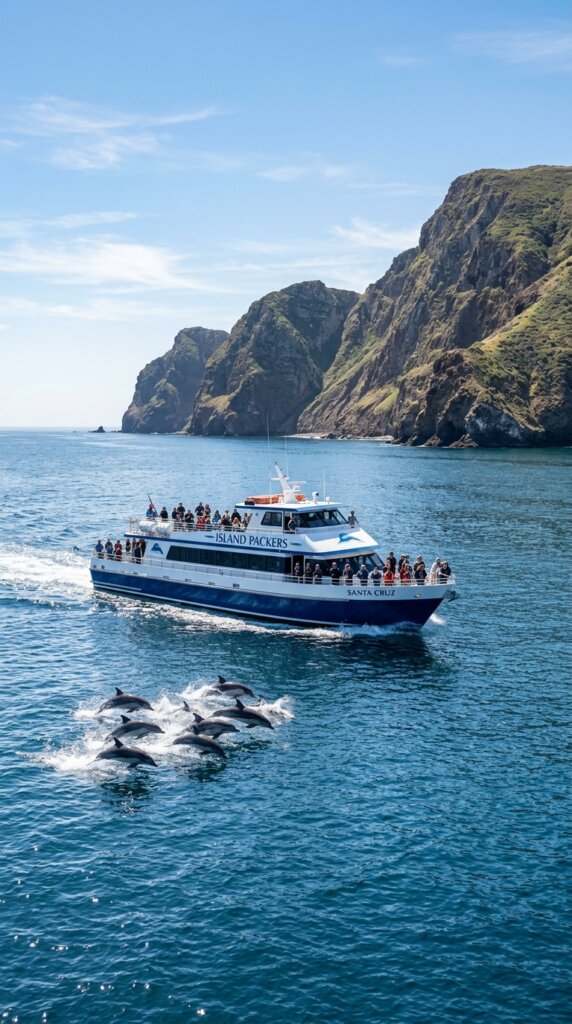
Getting to Channel Islands National Park is part of the adventure — there’s no bridge, no road, and no way to just drive up and park. You’ll need to reach the islands by boat or small plane, which is exactly what keeps this place so wild and uncrowded.
Most visitors go through Island Packers, the park’s official concessionaire, so that’s your main resource for planning transportation.
Ferry options and departure ports
Ferries depart from two harbors on the mainland:
- Ventura Harbor – The main hub, with trips to all five islands, including Santa Cruz, Anacapa, Santa Rosa, and San Miguel. This is also where you’ll find the park’s visitor center, so it’s worth stopping in before you sail.
- Channel Islands Harbor in Oxnard – A smaller satellite location that mainly runs trips to Anacapa Island.
A few practical notes on the ferry:
- Boat rides run anywhere from about 1 hour (to Anacapa or Santa Cruz) up to 2.5–4 hours for the more remote islands like Santa Rosa and San Miguel.
- Santa Cruz Island is the most popular and most frequently serviced, with boats running most days of the week year-round.
- Santa Rosa and San Miguel have limited, seasonal schedules and are more weather-dependent, so book those trips with some flexibility in mind.
- If you’d rather fly, Channel Islands Aviation offers small plane access to Santa Rosa Island as an alternative to the ferry.
Travel tip: Reserve your ferry tickets in advance, especially for weekends and summer months. If you’re camping overnight, you’ll need to lock in your boat transportation before booking your campsite, since spots on the boat are limited.
Best time of year to go
Channel Islands National Park is open year-round, but when you visit changes what you’ll see and how smooth your boat ride will be.
- Late spring through early fall is generally the best window — calmer seas, milder weather, and better conditions for hiking, kayaking, and camping.
- Winter through mid-spring (roughly December to April) is prime time for gray whale migration, making it a great season for wildlife lovers, even if the water can be choppier.
- Summer brings warmer days and a chance to spot humpback whales, but it’s also the busiest and most popular time to visit, so ferries fill up fast.
Travel tip: If you get seasick easily, aim for late spring or summer when the water tends to be calmer, and consider taking motion sickness medication before boarding regardless of season — Pacific crossings can get choppy even on a “good” day.
Which Island Should You Visit First
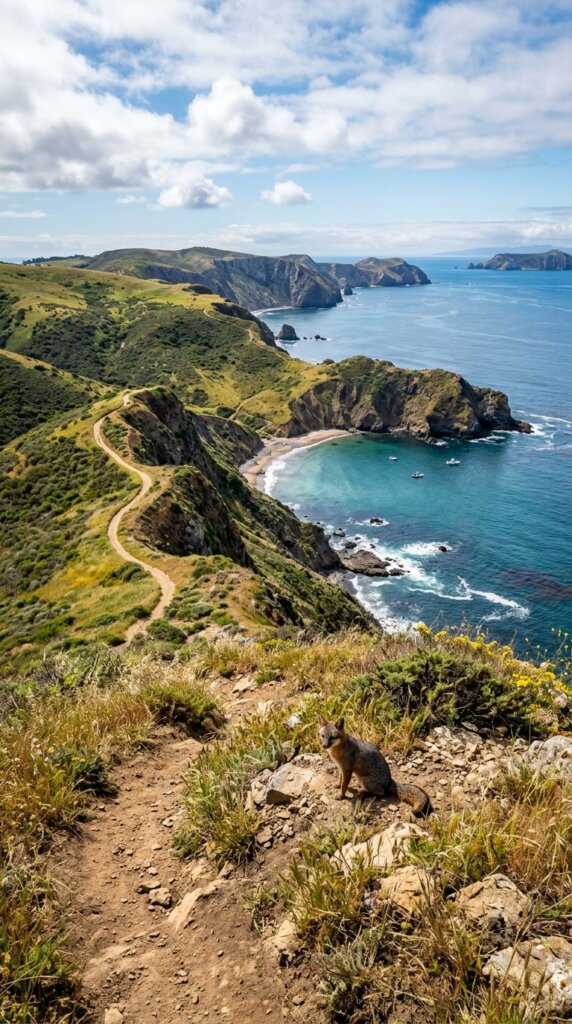
With five islands to choose from, it’s easy to feel overwhelmed when planning your first trip to Channel Islands National Park. The good news? Two islands stand out as the best starting points for first-timers, since they’re the easiest to reach and offer the most reliable ferry schedules.
Here’s how to decide between them.
Santa Cruz Island
Santa Cruz is the largest island in the park and the top pick for most first-time visitors. It’s about an hour by ferry from Ventura Harbor, with boats running most days of the week year-round.
What makes it stand out:
- Variety of hikes — from easy coastal walks to longer routes like Cavern Point and Potato Harbor, with dramatic cliffside views along the way.
- Best wildlife viewing — this is your best shot at spotting the island fox, found only in the Channel Islands.
- More to do — kayaking, snorkeling, and sea cave tours (including Painted Cave) are all based here.
- Camping — Scorpion Ranch Campground is the most accessible and popular campground in the park.
Travel tip: Pack a full day’s worth of food and water, since there are no shops or trash facilities on the island — everything you bring in, you pack out.
Anacapa Island
Anacapa is the smaller, closer sibling to Santa Cruz, and it’s a great choice if you want a shorter, more relaxed introduction to the park. The ferry ride takes about an hour, and the whole island can be explored in just a few hours.
What to expect:
- A quick, rewarding hike — cliffside trails lead to spots like Inspiration Point and the historic Anacapa lighthouse.
- Great birdwatching — the island is known for its seabird colonies and sea lions.
- Plan around the boat timetable — time ashore depends on the available sailings. Check the return trip before treating Anacapa as a half-day outing.
Travel tip: Landing on Anacapa means climbing a steel-rung ladder from the boat and then 157 stairs to the top of the island, so it’s not the best choice if you have mobility concerns — Santa Cruz has gentler access points instead.
Bottom line: If you only have one day and want variety, go with Santa Cruz. If you want an easier, shorter outing to dip your toes into island life, Anacapa is the better fit.
Top Things to Do
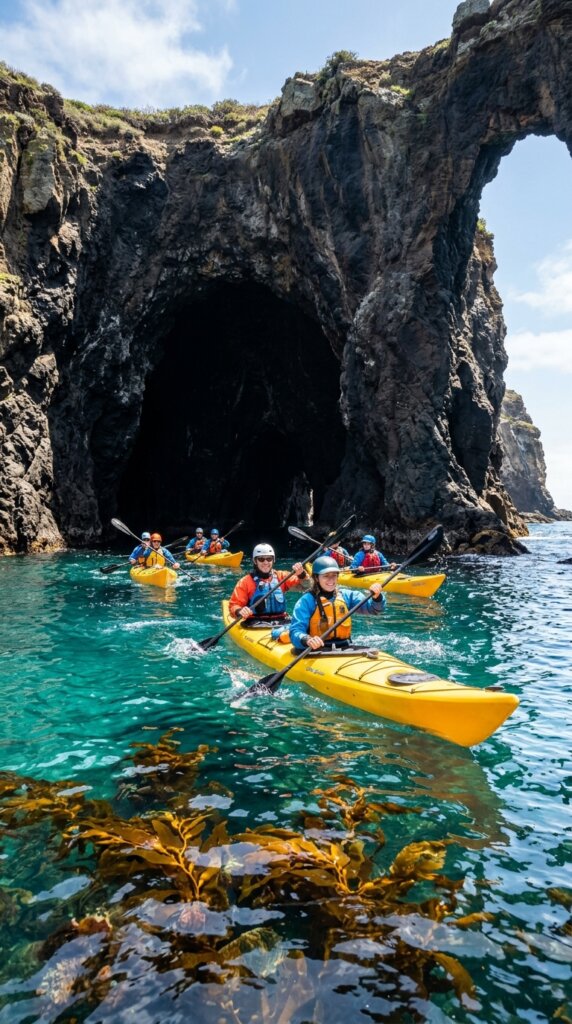
Once you’ve picked your island, the real fun begins. Channel Islands National Park is a playground for outdoor lovers, and most activities fall into three categories: hiking, water sports, and wildlife watching.
Hiking trails
Trails here range from easy strolls to full-day treks, with most starting right from the ferry landing.
- Cavern Point Loop (Santa Cruz) — A short, moderate hike with sweeping ocean views. Great if you’re short on time.
- Potato Harbor Trail (Santa Cruz) — A longer, easy-to-moderate route along coastal bluffs overlooking a hidden cove.
- Smugglers Cove Trail (Santa Cruz) — About 8 miles round trip for hikers who want a full day outdoors.
- Inspiration Point Trail (Anacapa) — A short, rewarding hike with views of the island’s iconic arch and the lighthouse.
Travel tip: Carry enough water for your route. NPS lists drinking water at Scorpion Canyon campground and specified Santa Rosa locations, but most islands and other landing areas do not have it. Check the current facilities for your exact destination.
Kayaking and snorkeling
The waters around the islands are just as impressive as the land, with healthy kelp forests and some of the best sea caves in California.
- Painted Cave (Santa Cruz) — One of the largest sea caves in the world, accessible by guided kayak tour or boat.
- Scorpion Anchorage (Santa Cruz) — A popular launch point for both kayaking and snorkeling among kelp forests.
- Anacapa’s landing cove — A solid, easy-access snorkeling spot close to the boat dock.
Travel tip: The water is cold year-round, so rent or bring a wetsuit if you plan to snorkel or kayak — most outfitters based in Ventura Harbor offer both gear rentals and guided tours you can book ahead of time.
Wildlife spotting
Part of what makes Channel Islands National Park so special is how easy it is to spot wildlife, both on land and from the boat.
- Island fox — Found nowhere else on Earth, these small, curious foxes are often seen right along the trails (keep a close eye on your food, they’re bold).
- Sea lions and seals — Commonly spotted lounging on rocks or swimming near sea caves.
- Whales and dolphins — Gray whales pass through in winter and spring, while humpback and blue whales are more common in summer and fall. Dolphin pods often ride alongside the ferry.
- Seabirds — Anacapa is known for nesting colonies of pelicans, gulls, and other seabirds along its cliffs.
Keep your eyes on the water during the ferry crossing — some of the best wildlife sightings happen before you even reach the island.
Camping and Practical Tips
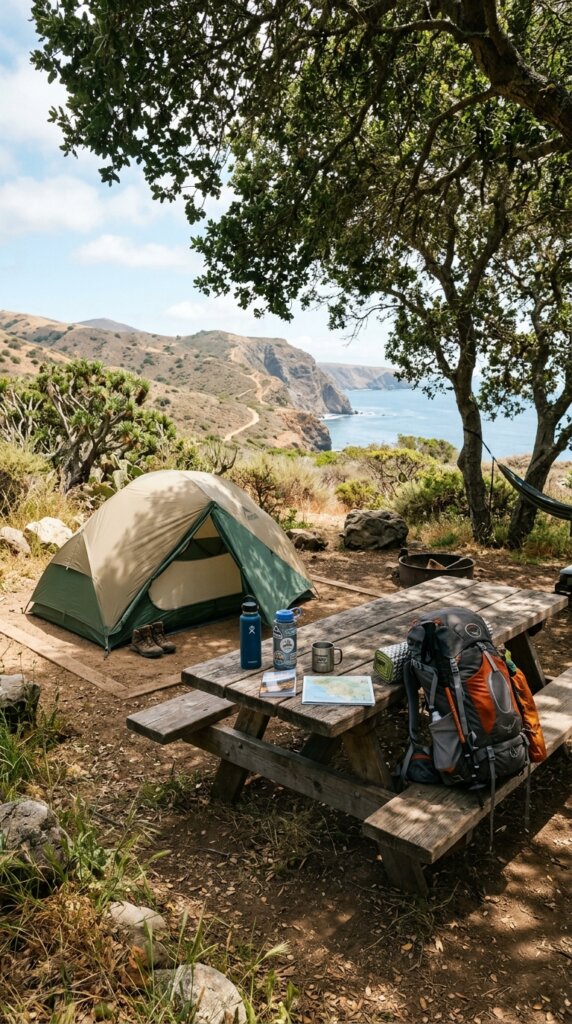
If you really want to experience Channel Islands National Park, spending a night under the stars is one of the best ways to do it. With no light pollution and no cars, the islands feel wild in a way that’s hard to find anywhere else in California.
Camping is available year-round on all five islands, with one established campground per island — plus limited backcountry sites on Santa Cruz and Santa Rosa for more experienced backpackers.
A few things to know before you book:
- All campsites are primitive — no electricity, running water isn’t guaranteed everywhere, and there are no stores or services on the islands.
- Scorpion Canyon Campground on Santa Cruz is the most popular and accessible, just a short half-mile to one-mile walk from the pier.
- You’ll need to carry all your own gear from the boat to the campsite, so pack smart and light.
What to pack
Since there’s nowhere to buy supplies once you’re on the island, packing right matters more here than at most national parks.
- Water — bring more than you think you need; some campgrounds don’t guarantee a water supply.
- All your food — plus a hard-sided container to store it, since island foxes and other wildlife are bold around food and trash.
- Layers — weather shifts fast, and wind is common, especially on the outer islands.
- A low-profile tent — strong winds are common, so a sturdy, wind-resistant setup is a must.
- Trash bags — everything you bring in, you pack out, including trash.
- Sun protection — most trails have little to no shade.
Travel tip: Consolidate your gear into one large backpack rather than several bags. You’ll be carrying everything yourself from the dock to the campsite, and campers are often expected to help unload gear from the boat too.
Reservations and permits
Camping in Channel Islands National Park takes a bit more planning than a typical trip, mainly because everything depends on the ferry schedule.
- Coordinate the boat and campsite. Find dates with both transport and campsite availability before finalizing an overnight trip; one reservation alone does not guarantee the other.
- Reserve your campsite through Recreation.gov. Bookings open up to six months in advance, and popular sites — especially on Santa Cruz — fill quickly for summer weekends.
- San Miguel Island requires an extra permit (including a liability waiver) due to its history as a former military site. Island Packers will provide this form when you book.
- Bring your confirmation. You’ll need to show your reservation confirmation to the ranger when you arrive on the island.
Travel tip: There are no walk-up or first-come, first-served campsites anywhere in the park, so don’t plan a spontaneous overnight trip — everything needs to be booked ahead of time.