
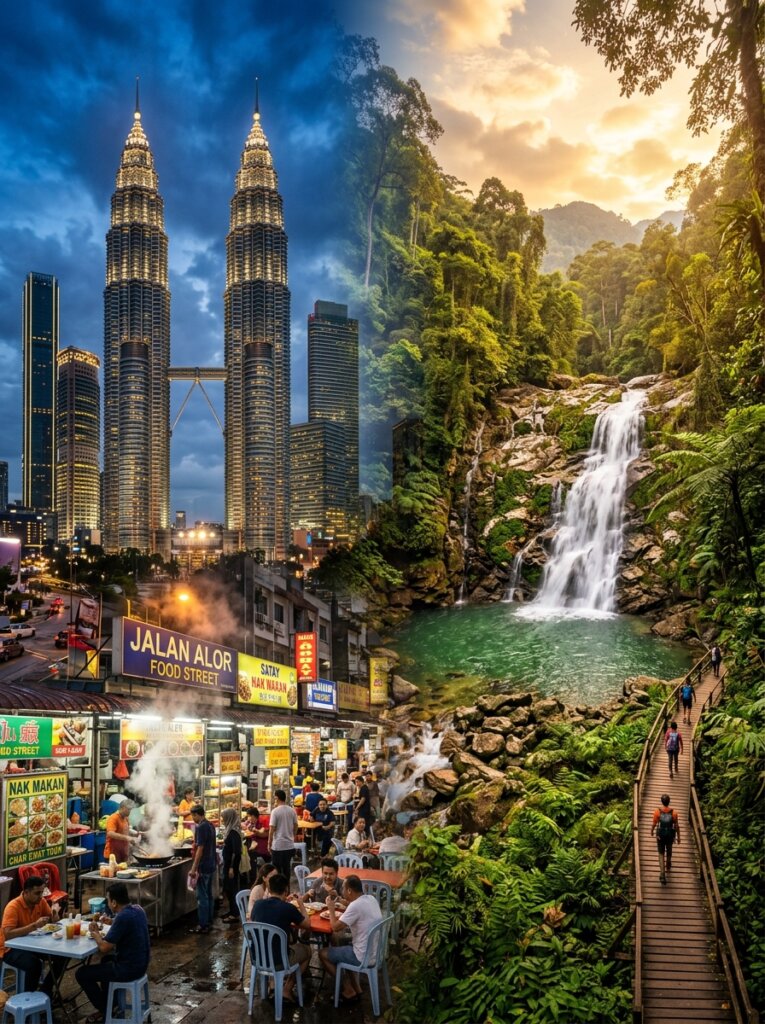
Why Malaysia Should Be on Your Travel List
Malaysia doesn’t get nearly enough credit.
Most travelers breeze through Kuala Lumpur for a night or two, snap a photo at the Petronas Towers, and move on. But those who slow down quickly realize this country has layers — rainforests older than the Amazon, coastlines that rival Thailand, street food that stops you mid-sentence, and a cultural mix you won’t find anywhere else in Southeast Asia.
Here’s what makes Malaysia genuinely worth your time:
- Incredible food diversity. Malay, Chinese, and Indian culinary traditions collide here in the best possible way. Every meal is an event.
- Nature that’s actually accessible. You don’t need to be an extreme hiker to experience ancient jungle, wildlife, and waterfalls. Much of it is within reach of a budget taxi or local bus.
- A mix of budgets. Malaysia works whether you’re backpacking on RM50 a day or treating yourself to a luxury resort in Langkawi.
- English is widely spoken. Getting around, asking for directions, and ordering food is refreshingly easy for English-speaking travelers.
- It’s genuinely underrated. Fewer crowds than Bali, lower prices than Singapore, and more variety than most people expect.
The best part? Most of the country’s highlights sit just outside the tourist trail — which means you get the experience without the chaos.
If you’ve been sleeping on Malaysia, this list is your wake-up call.
Top Things to Do in Malaysia
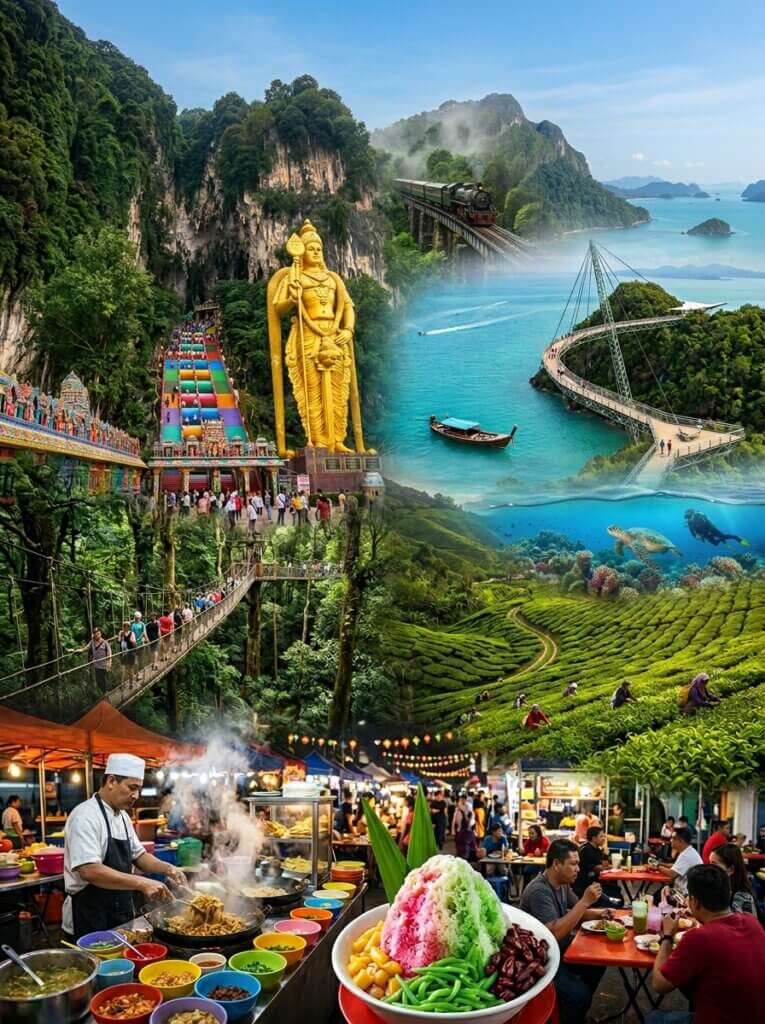
Ready to go beyond the guidebook? Here are the experiences that make Malaysia truly unforgettable.
1. Eat Your Way Through Penang’s Street Food Scene
Penang is widely considered the street food capital of Malaysia — and it earns that title every single night.
Head to Gurney Drive or Lorong Baru (New Lane) after dark and you’ll find rows of hawker stalls serving up char kway teow, asam laksa, cendol, and rojak. The flavors are bold, the portions generous, and the prices shockingly low.
Practical tip: Go hungry and go late. Most hawker stalls hit their stride after 7pm. Bring cash — many stalls don’t accept cards.
2. Trek the Rainforests of Taman Negara
Taman Negara is one of the world’s oldest rainforests — estimated at over 130 million years old. Walking through it feels like stepping onto a different planet.
You can do guided night jungle walks, canopy walkways, or multi-day river treks deeper into the forest. Wildlife sightings aren’t guaranteed, but the atmosphere alone is worth it.
Practical tip: Base yourself in Kuala Tahan village. Book a guided trek for your first day — the trails aren’t always well-marked on your own.
3. Island-Hop Around Langkawi
Langkawi is Malaysia’s most famous island destination, but most visitors only scratch the surface. The archipelago has 99 islands — many of them uninhabited and reachable by boat charter.
Beyond the beaches, don’t miss the Langkawi Sky Bridge, the mangrove kayaking tours, and the duty-free shopping in Kuah town.
Practical tip: Rent a scooter to explore at your own pace. The island is easy to navigate and much more rewarding when you’re not following a tour bus.
4. Explore George Town’s Street Art and Heritage
George Town in Penang is a UNESCO World Heritage Site, and it shows. The old town is packed with colonial shophouses, clan temples, and some of the most famous street art in Southeast Asia.
The iconic steel rod murals by Lithuanian artist Ernest Zacharevic are scattered across the neighborhood — picking them up on a self-guided walk is a full morning well spent.
Practical tip: Download a George Town street art map before you go. Start early — the narrow lanes heat up fast by midday.
5. Visit the Batu Caves Near Kuala Lumpur
Just 30 minutes from KL city center, Batu Caves is one of the most visited Hindu shrines outside of India. The 272 rainbow-painted steps lead up to a dramatic limestone cave complex housing the Sri Subramaniam Temple.
It’s one of the easiest day trips from Kuala Lumpur, and completely free to enter.
Practical tip: Go before 9am to beat the crowds and the heat. Dress modestly — shoulders and knees should be covered. The KTM Komuter train drops you right at the entrance.
6. Take the Jungle Railway Through Kelantan
This is one of the most underrated things to do in Malaysia — and most tourists have never heard of it.
The Jungle Railway (Keretapi Tanah Melayu) cuts through the heart of the Malaysian peninsula, passing remote villages, rivers, and dense jungle. The full route from Gemas to Tumpat takes around 14 hours, but you can ride shorter sections.
Practical tip: Take the overnight train for the best experience. Bring snacks, a light jacket for the AC, and enjoy the scenery from the window.
7. Discover the Cameron Highlands Tea Plantations
Perched in the cool hills of Pahang, the Cameron Highlands is Malaysia’s tea country. The rolling green plantations are a striking contrast to the tropical heat down below.
Visit the BOH Tea Plantation for a free factory tour and a cup of fresh tea on their hillside café terrace. The strawberry farms and morning markets are worth an hour of your time too.
Practical tip: The highlands sit at around 1,500m elevation — bring a light layer, especially for evenings. A 3-hour drive from KL makes it a comfortable weekend trip.
8. Dive in the Waters Around Sipadan Island
Sipadan, off the coast of Sabah in Malaysian Borneo, is consistently ranked among the top dive sites in the world. The island sits on an underwater volcanic cone, dropping 600 meters straight down — creating a wall dive that’s genuinely world-class.
Expect to see green and hawksbill turtles, barracuda tornadoes, hammerhead sharks, and reef fish in extraordinary numbers.
Practical tip: Permits to dive Sipadan are strictly limited to 120 per day. Book well in advance — at least 3 to 6 months ahead during peak season. You’ll stay on nearby Mabul or Kapalai island and day-trip to Sipadan.
9. Wander the Night Markets (Pasar Malam)
Every neighborhood in Malaysia seems to have its own pasar malam — a weekly night market that takes over a street with food, clothing, produce, and general chaos in the best sense.
It’s not a tourist attraction. It’s just where locals shop and eat on a Tuesday night. That’s exactly why you should go.
Practical tip: Ask your guesthouse or hotel which nearby pasar malam is on that evening. Show up with small bills and an empty stomach.
10. Stay in a Traditional Kampung Village
A kampung is a traditional Malay village — wooden stilted houses, fruit trees in the yard, and a pace of life that feels worlds away from KL.
Several homestay programs across Malaysia let you stay with local families, join in daily activities, and eat home-cooked Malay food. It’s one of the most genuine cultural experiences the country offers.
Practical tip: Look into homestay programs in Negeri Sembilan or Kelantan — both regions are known for strong traditional Malay culture. Book through Tourism Malaysia’s official site or local operators for vetted options.
Best Time to Visit Malaysia
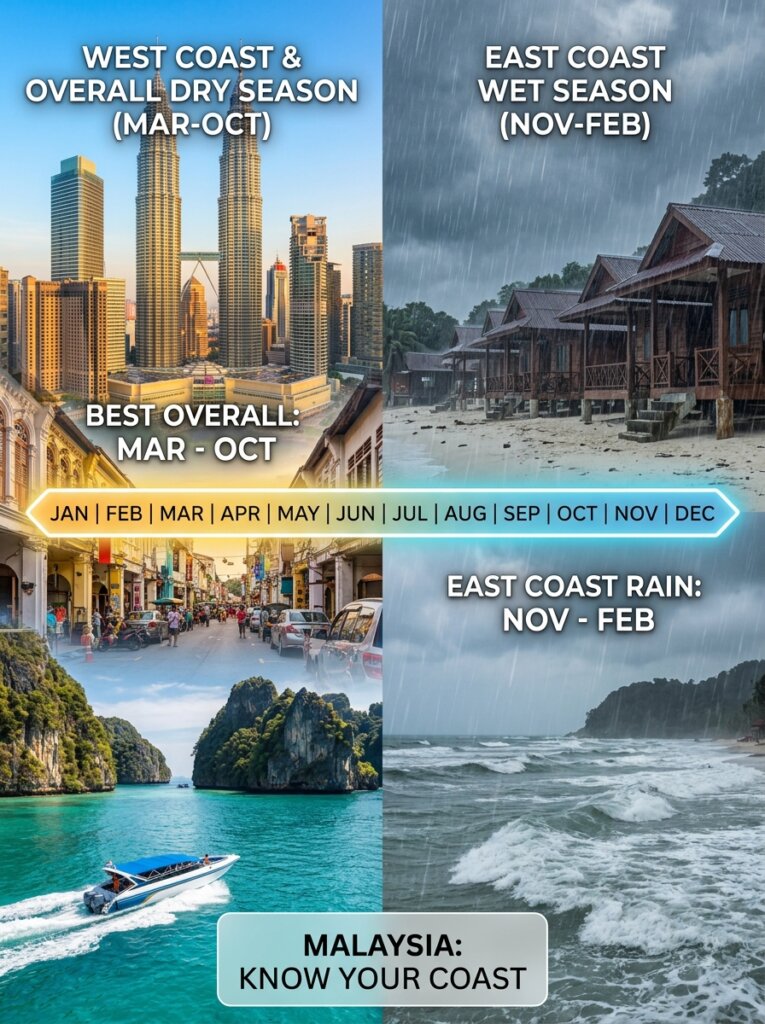
Malaysia sits close to the equator, so it’s warm and humid year-round. There’s no single “perfect” month — the best time to visit Malaysia really depends on where you’re going and what you want to do.
Here’s the simple breakdown:
- November to February — The wet season on the east coast (Perhentian Islands, Tioman, Cherating). Avoid beach trips here during this period. The west coast (Langkawi, Penang, KL) is drier and a great choice.
- March to October — The east coast beaches open up and conditions are ideal for diving and island-hopping. The west coast gets some rain but nothing that ruins a trip.
- December to February — Peak season overall. Expect higher prices and more crowds, especially around the school holiday periods.
For most travelers, the sweet spot is March to early October — good weather across most of the country, manageable crowds, and standard pricing.
A few extra things worth knowing:
- Sabah and Sarawak (Malaysian Borneo) have their own weather patterns. The best time to visit is generally April to September.
- Cameron Highlands is pleasant year-round thanks to its elevation. Rain is common but rarely lasts all day.
- Ramadan (dates shift each year) affects restaurant hours in more traditional towns. Many local eateries close during daylight hours, though cities like KL are largely unaffected.
Practical tip: Malaysian weather can be unpredictable regardless of the season. Pack a light rain jacket no matter when you go — an afternoon shower can appear out of nowhere and clear up just as fast.
Quick Travel Tips for First-Timers
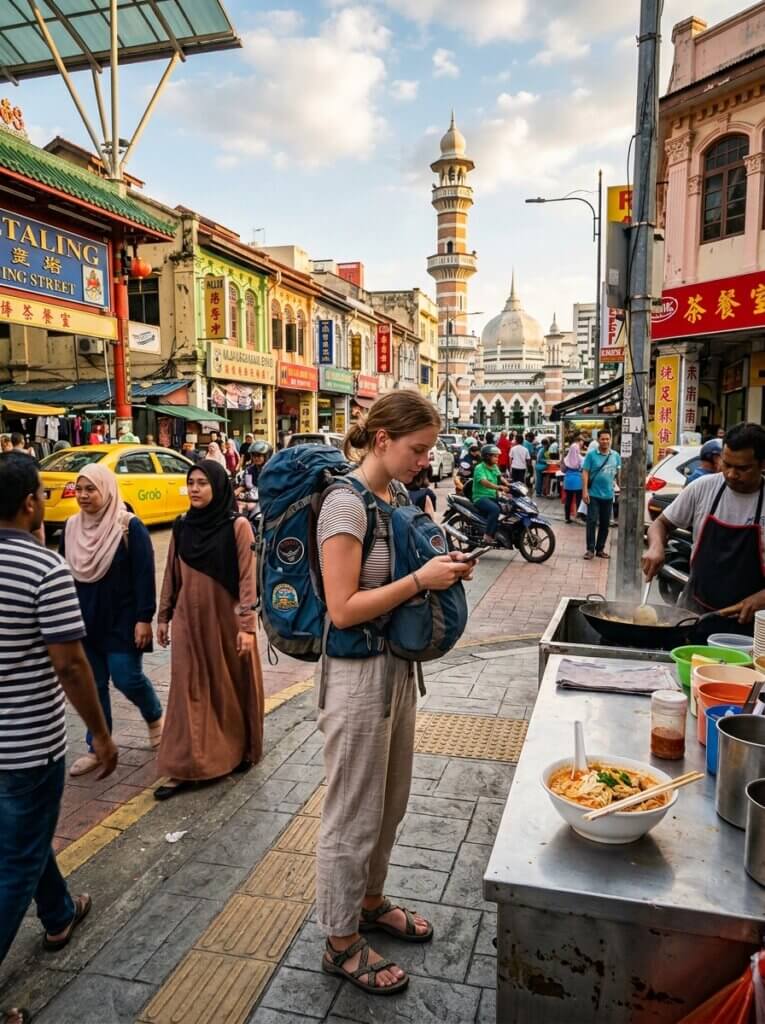
First time in Malaysia? Here’s what actually helps before you land.
Getting Around
Malaysia’s public transport is solid in the cities but limited between regions. In KL, the MRT and LRT cover most tourist areas well. For longer distances, budget flights on AirAsia or Firefly are often cheaper and faster than buses or trains.
- Grab (Southeast Asia’s Uber) is your best friend for short city rides — reliable, affordable, and no haggling required.
- Rent a car if you’re exploring less connected areas like the Cameron Highlands or the East Coast.
Money and Payments
The currency is the Malaysian Ringgit (MYR). Cash is still king at hawker stalls, pasar malams, and smaller towns.
- ATMs are widely available in cities and towns.
- Larger malls, hotels, and restaurants accept cards without issue.
- Tipping is not customary in Malaysia — it’s appreciated but never expected.
Staying Connected
Grab a local SIM card at the airport on arrival. Maxis, Celcom, and Digi all offer affordable tourist data plans. Coverage is good in cities and most tourist areas, but expect gaps in deep jungle or rural regions.
Cultural Etiquette
Malaysia is a Muslim-majority country with strong Buddhist, Hindu, and Christian communities alongside. A little cultural awareness goes a long way.
- Dress modestly when visiting mosques, temples, and rural communities. Cover shoulders and knees.
- Remove your shoes before entering homes and places of worship.
- Use your right hand for eating and passing items — this is considered respectful across all cultures here.
Health and Safety
Malaysia is generally safe and well set up for tourists.
- Tap water is treated but most locals and travelers stick to bottled water to be safe.
- Mosquito repellent is a must, especially if you’re heading into jungle areas or staying near standing water.
- Travel insurance is strongly recommended, particularly if you’re planning diving, trekking, or adventure activities.
Practical tip: Download Google Maps offline for Malaysia before you leave your hotel. Mobile data can be spotty in some areas, and having offline maps saves a lot of frustration on the road.
Final Thoughts + Pin It for Later
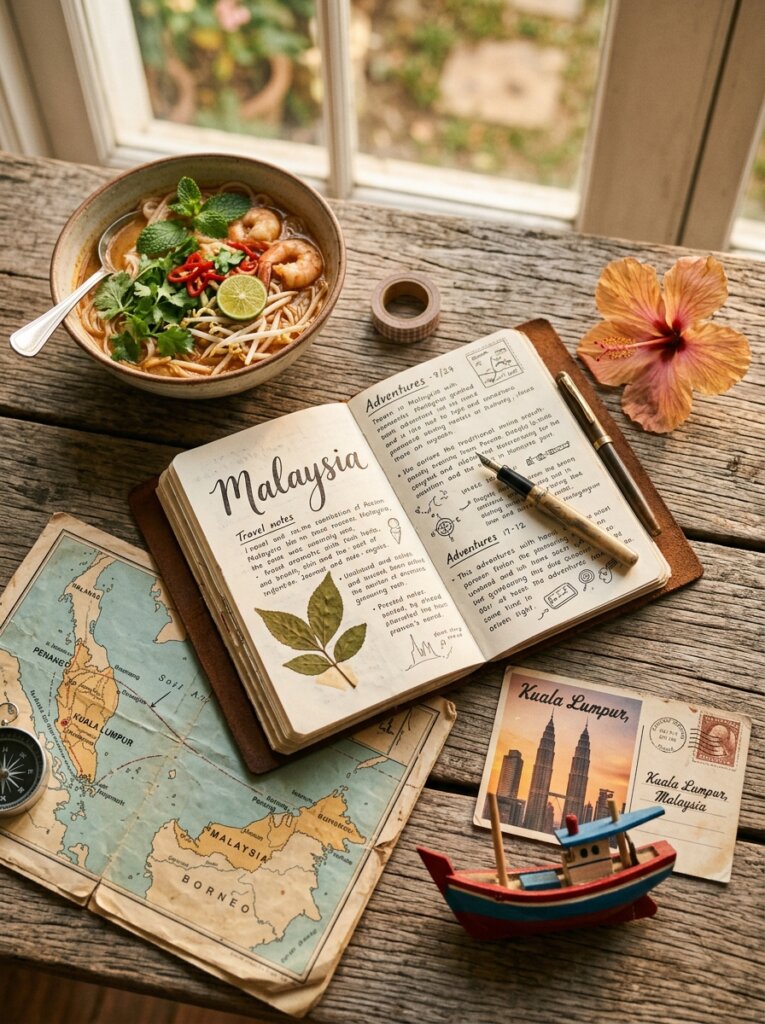
Malaysia is one of those destinations that quietly wins you over.
It doesn’t shout for attention the way some Southeast Asian countries do. But spend a week here — eating at hawker stalls, wandering heritage streets, getting lost in the jungle — and you’ll understand why so many travelers end up extending their stay.
The things to do in Malaysia go far beyond the Petronas Towers and beach resorts. The real magic is in the details: a bowl of laksa at a roadside stall, the sound of the call to prayer echoing through a small town, a slow boat ride through mangrove forest at dusk.
Whether you’re a first-timer or coming back for another round, Malaysia has a way of surprising you every time.
Before you go, here’s a quick recap:
- Penang for food and culture
- Taman Negara for jungle adventure
- Langkawi for beaches and island life
- George Town for heritage and street art
- Cameron Highlands for cool air and tea
- Sipadan for world-class diving
- Kampung homestays for something truly authentic
If this post helped you plan your trip, save it to your Pinterest travel board so you can come back to it later. Planning ahead makes a big difference — especially for must-book experiences like Sipadan diving permits and jungle railway tickets.
Happy travels — Malaysia is waiting. 🇲🇾